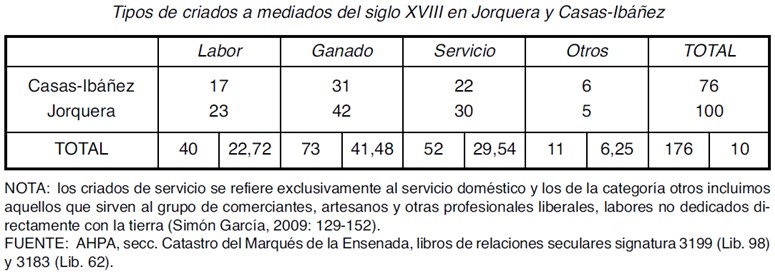
Typology of servants in a rural environment, a reflection of economic activity and family dependency

Mujeres

Resource that reflects the structure of the home in a rural setting on the banks of the River Júcar in Albacete

Analysis of the size and composition of the household according to its family model, the number of children, relatives and servants

Differences between the ages of men and women at marriage in inland Spain, 16th-18th centuries

Ratio of the number of servants to the number of heads of households belonging to the agrarian oligarchy
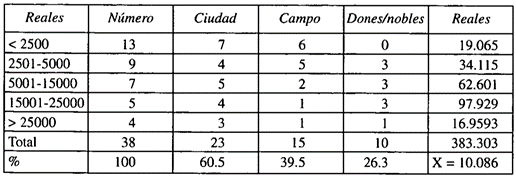
Transmission of patrimony in the form of matrimonial dowry in the Sierra de Alcaraz as a form of social reproduction
Household structure linked to the domestic aggregates according to the professions carried out by the heads of household. Process of inversion in the structures throughout the 18th century.
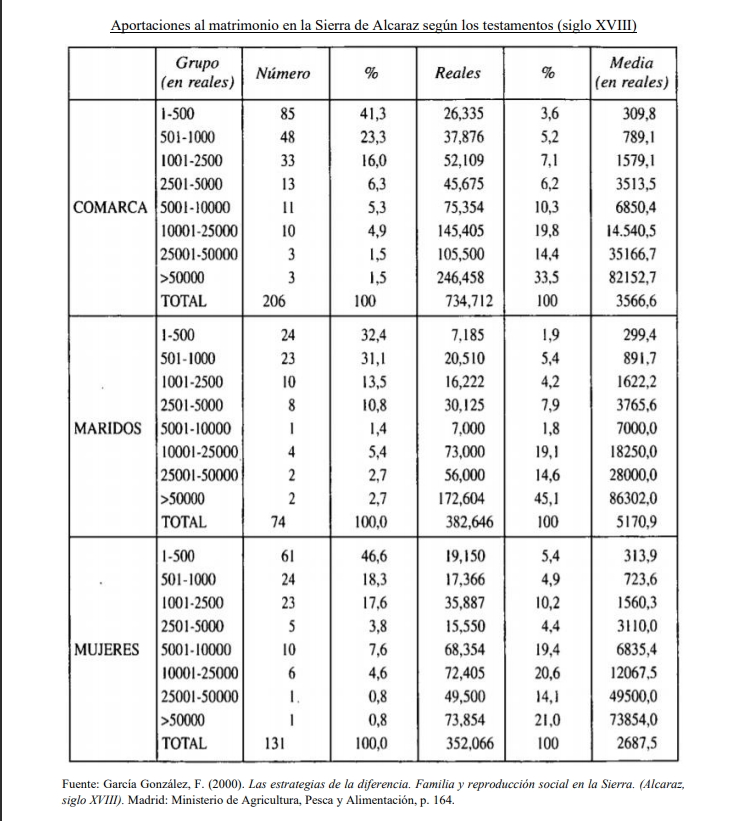
Transmission of wealth via wills reflecting parental affinities and social clientelism. A distinction is also made between inherited property according to sex.
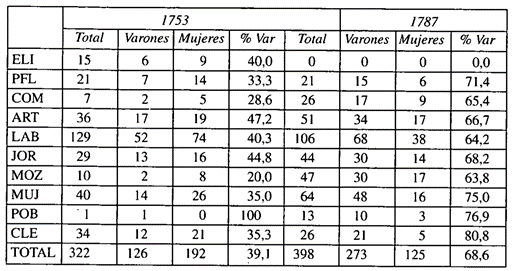
Women heads of household in Spain and the family model they had, highlighting the nuclear family above the rest
Loneliness had a woman’s name. Evolution that shows the survival of customs between the Ancien Régime and liberalism.
Page 4 of 6