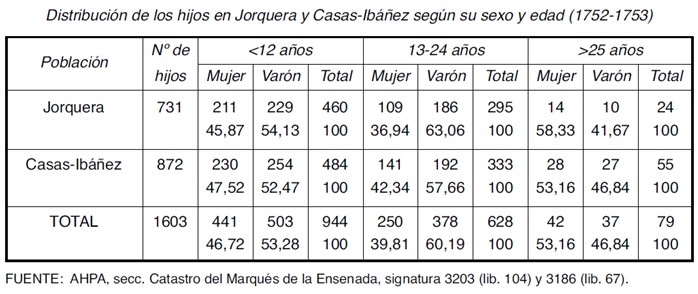
Example that analyses the dynamics of the offspring of families in two municipalities in central-southern Spain to see the life cycle in the creation of new family nuclei

Hogares
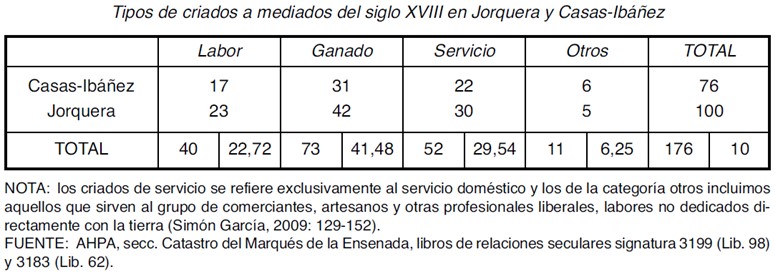
Typology of servants in a rural environment, a reflection of economic activity and family dependency
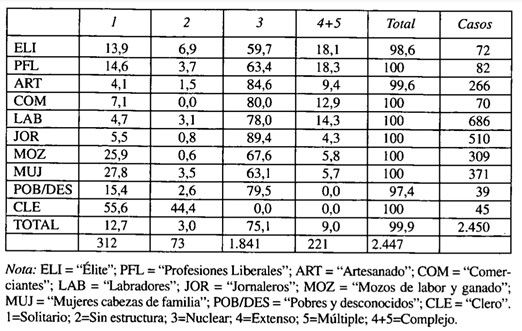
Household structure according to the activities carried out by the head of the household. Occupation determined the composition of the family.
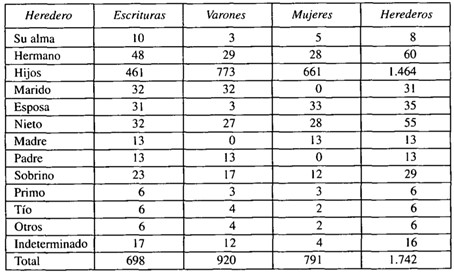
The transmission of wealth through inheritance according to kinship and sentimental affinities. The Castilian model of egalitarian inheritance prevailed, and the most common heirs were the first-born.
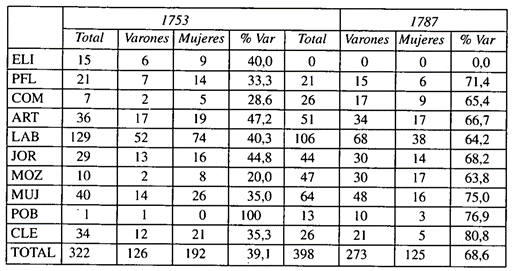
Women heads of household in Spain and the family model they had, highlighting the nuclear family above the rest
Land ownership in some municipalities in Spain at the end of the Ancien Régime, highlighting the concentration of land in a few hands
Family models in urban and rural areas in the Kingdom of Valencia, highlighting the importance of the nuclear model
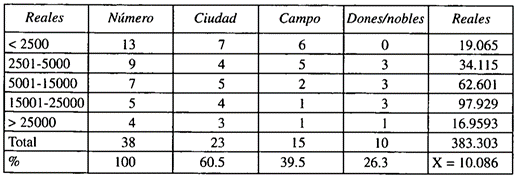
Transmission of patrimony in the form of matrimonial dowry in the Sierra de Alcaraz as a form of social reproduction
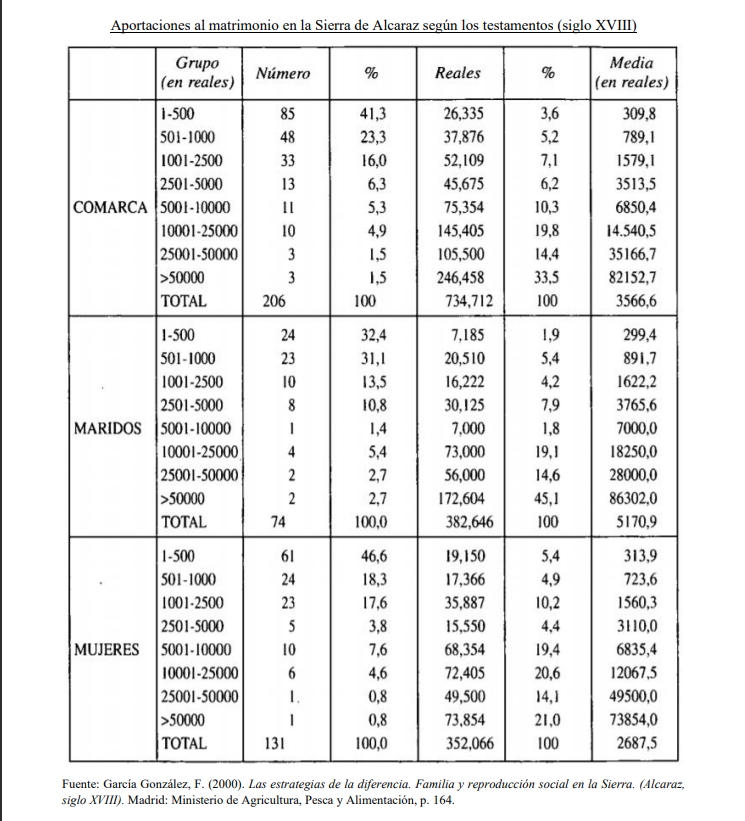
Transmission of wealth via wills reflecting parental affinities and social clientelism. A distinction is also made between inherited property according to sex.
12
Page 2 of 2