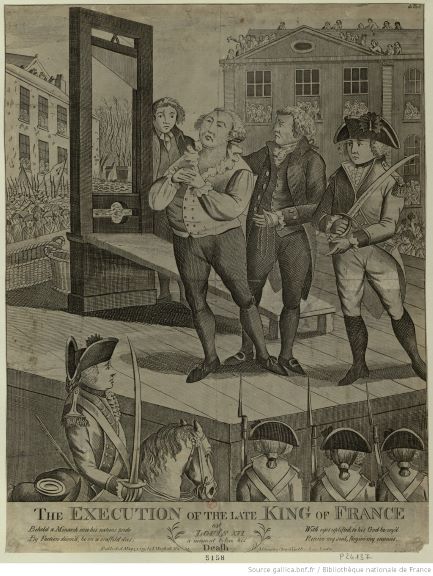
The image shows the moments before the execution of the last king of France, Louis XVI. The king can be seen in the centre of the image with the guillotine behind him and a pleading gesture.

Uncategorized
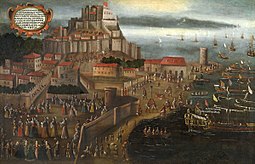
Expulsion of the Moors in the port of Denia, a work by Vicente Mostré.
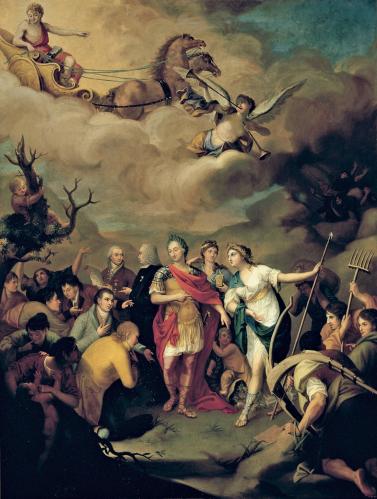
The image is a painting by Joseph Alonso del Ribero, dated 1805, which depicts Charles III handing over land in the Sierra Morena to settlers who had recently arrived from different territories.
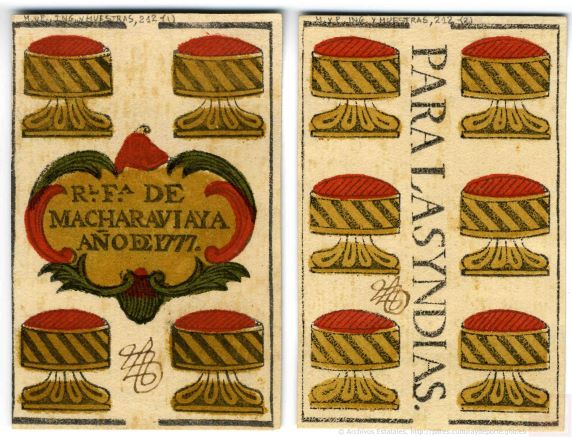
Image+J599 of playing cards manufactured at the Real Fábrica de Macharaviaya (Málaga)
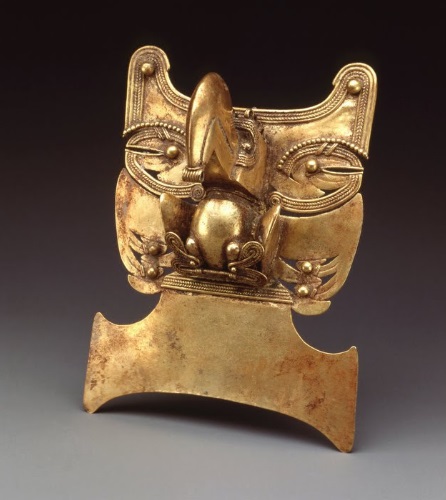
A zoomorphic gold pectoral cast in lost wax and hammered in gold belonging to a pre-Columbian society. Bogota Gold Museum.
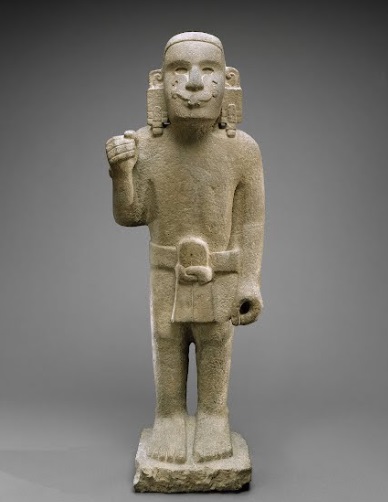
Anonymous Aztec standard-bearer figurine made ca. 1519 in volcanic stone, used during ceremonies. Museum of Fine Arts, Houston.
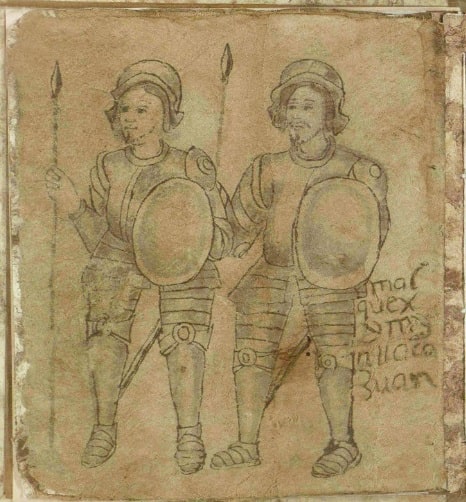
Spanish soldiers advancing across the Americas, despite notorious opposition from the belligerent Aztec people and the military alliances won by Cortés. Archivo de la Nación, Mexico.
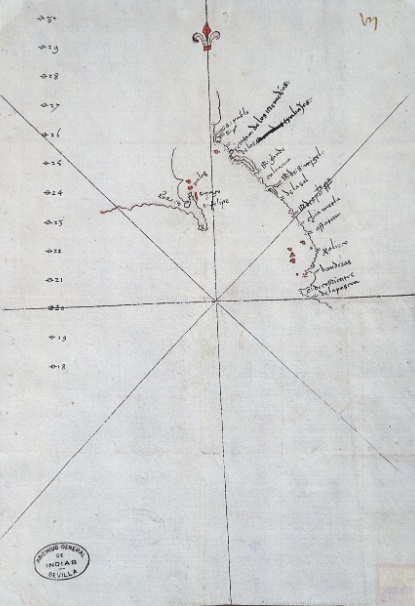
Map of the New Land of Santa Cruz, at the southern tip of California, discovered by Hernán Cortés in 1535.
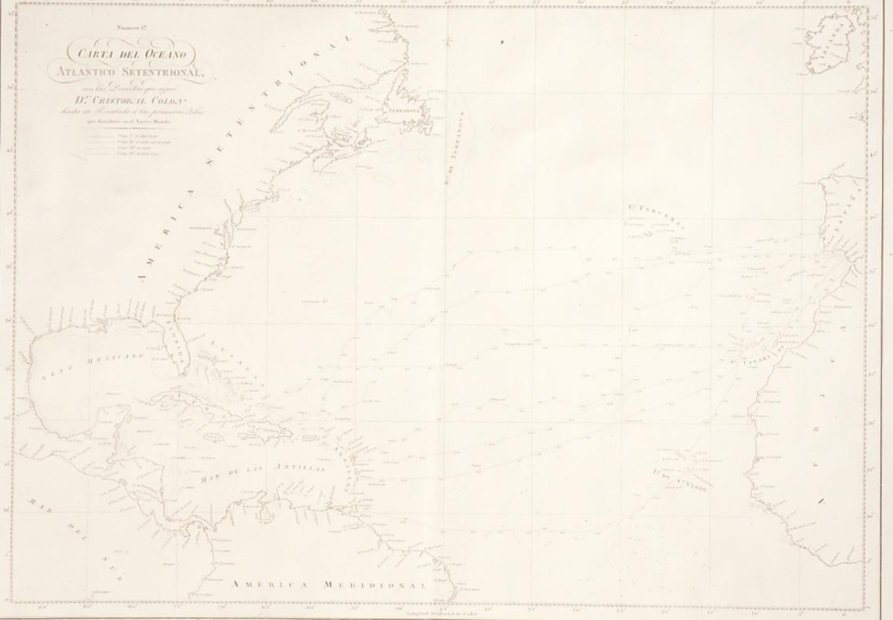
Map of the new lands discovered by Christopher Columbus on his four voyages to the American continent between 1492 and 1502.
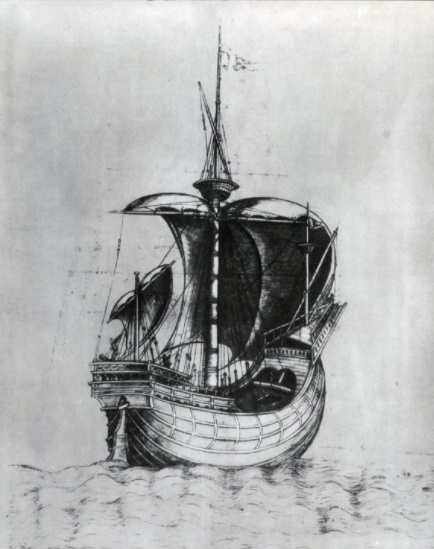
Recreation of one of the caravels with which Columbus travelled to America
Page 107 of 163